


Betri ya liFePo4 ni nini?
Ninaona vifurushi vikiharibika kwenye mstari wetu wa uzalishaji wakati wanunuzi wanapochukulia "LiFePO4" kama lebo ya uchawi, kwa hivyo nitarekebisha mkanganyiko huo na kuonyesha kinachohitajika katika ujenzi halisi wa nishati ya jua.
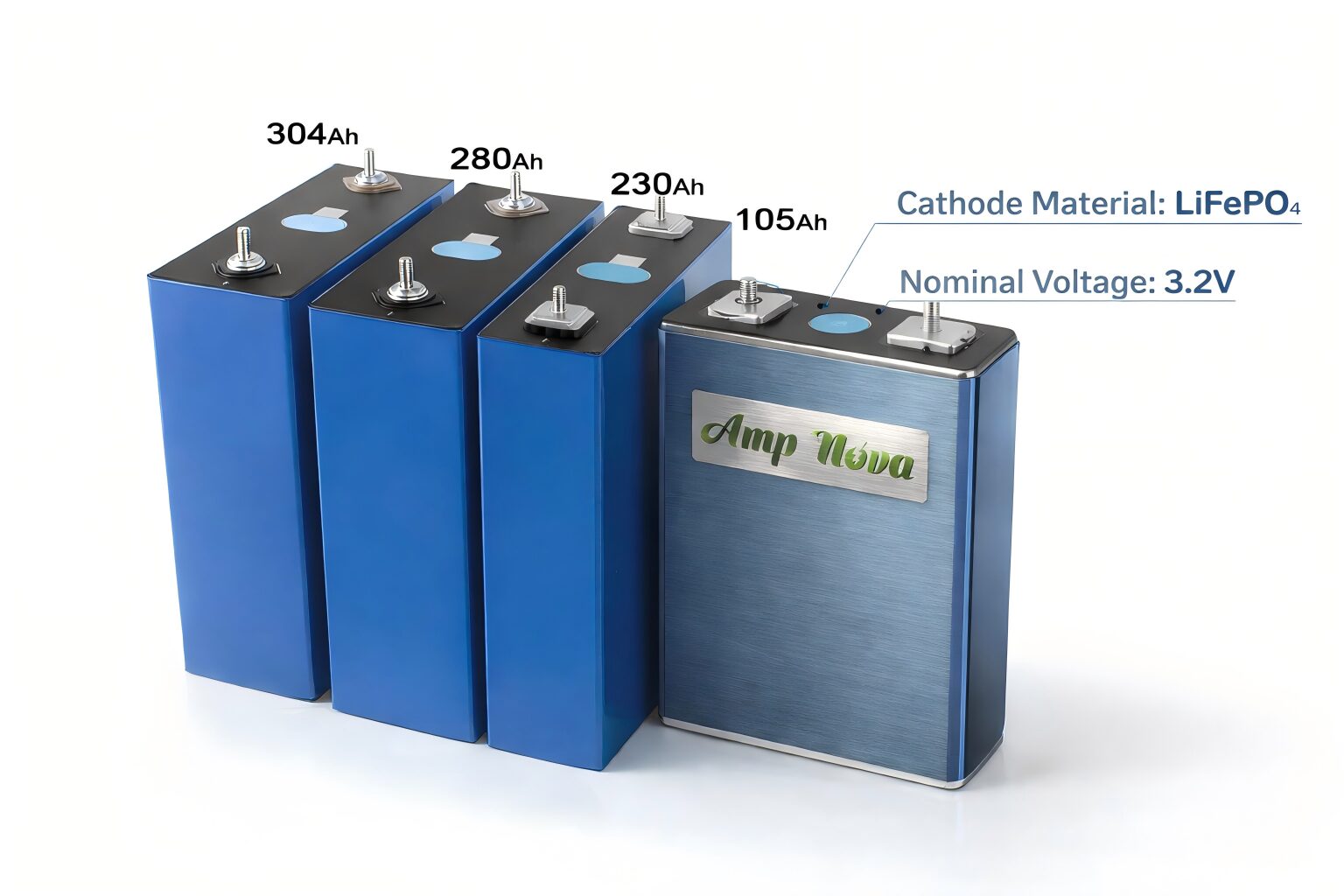
Betri ya LiFePO4 (LFP) ni betri ya lithiamu-ion inayoweza kuchajiwa tena ambayo hutumia fosfeti ya chuma ya lithiamu kama nyenzo ya kathodi, ikitoa usalama mkubwa na maisha marefu ya mzunguko ikiwa na volteji ya seli ya kawaida ya ~3.2–3.3V ambayo huendesha ukubwa wa pakiti (kama seli 4 mfululizo kwa "darasa la 12V").
Katika mwongozo huu, nitaelezea kemia ya LFP, tabia ya volteji, faida na hasara, na jinsi inavyolinganishwa na lithiamu-ioni ya NMC na asidi-risasi katika mifumo ya jua na simu inayotumika.
Ni nini LiFePO4 Betri ya (Lithiamu Iron Phosphate)?
Kwenye madawati yetu ya QC, njia ya haraka zaidi ya kugundua mfumo usiolingana ni pale lebo inaposema “LiFePO4” lakini mnunuzi anatarajia “betri zote za lithiamu zifanye kazi sawa.”
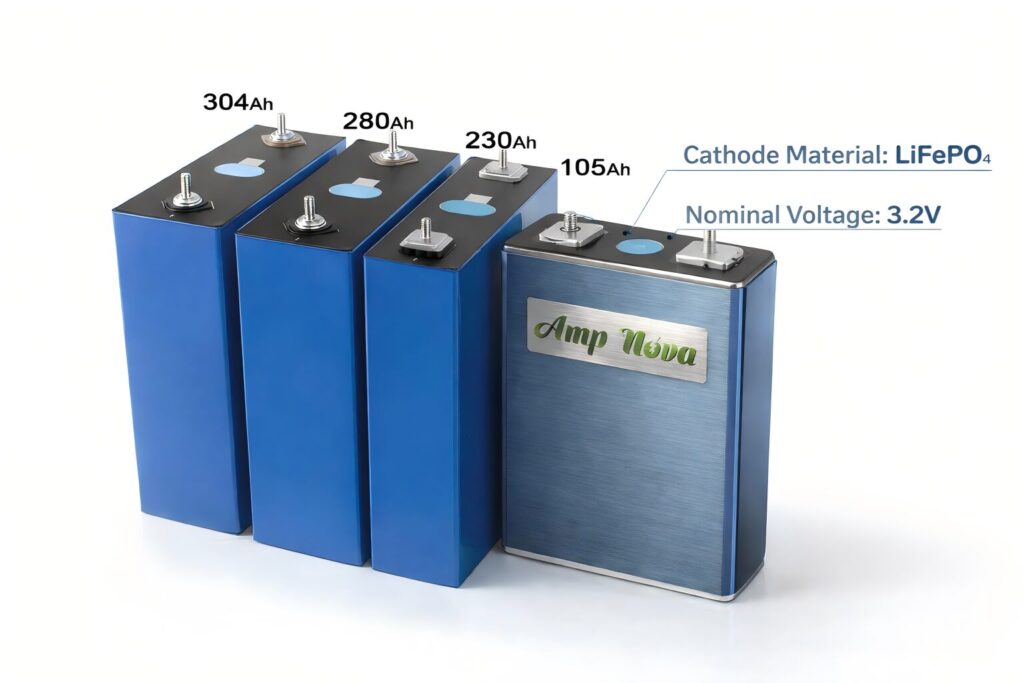
Betri ya LiFePO4 (pia huitwa LFP) ni betri ya lithiamu-ion ambayo hutumia fosfeti ya chuma ya lithiamu (LiFePO4) kama kathodi, ambayo hubadilisha volteji yake, tabia ya usalama, maisha ya mzunguko, na matumizi bora ikilinganishwa na kemia zingine za lithiamu-ion kama NMC.
LFP ni "lithiamu-ion," lakini si "sawa na NMC"
Mara nyingi watu husema "lithiamu-ion" kana kwamba ni kitu kimoja. Siyo hivyo. "Lithiamu-ion" ni familia ya kemia zinazoshiriki kanuni pana ya kufanya kazi, lakini hutofautiana katika nyenzo za kathodi.
- LiFePO4 (LFP): kathodi ya fosfeti ya chuma ya lithiamu
- NMC / NCA (mara nyingi huitwa "ternary" kwa Kichina): kathodi za nikeli/manganese/kobalti (au nikeli/kobalti/alumini)
- LCO, LMO, na wengine: hutumika katika vifaa mbalimbali vya elektroniki na miundo ya zamani
Chaguo hilo la cathode hubadilisha kile unachohisi uwanjani:
- Jinsi voltage ilivyo thabiti chini ya mzigo
- Jinsi kifurushi kinavyoathiriwa na matumizi mabaya ya joto
- Unaweza kutarajia mizunguko mingapi kabla ya uwezo kuisha
- Unaweza kufungasha nishati ngapi katika ujazo na uzito uliotolewa?
Ufafanuzi wa lugha rahisi unaoweza kutumia na wateja
Ukihitaji sentensi moja kwa mteja:
- LFP ni kemia ya betri ya lithiamu-ion iliyochaguliwa kwa ajili ya usalama na maisha marefu, mara nyingi kwa gharama ya ukubwa na uzito kwa kWh sawa.
Dokezo la haraka la kusakinisha
Kwa hifadhi ya nishati ya jua, LFP kwa kawaida hushinda kwa sababu mradi unathamini:
- utendaji unaotabirika
- vipindi virefu vya huduma
- wasifu wa hatari ya moto mdogo
- gharama ya chini ya maisha yote
Lakini bado inahitaji mipangilio na ulinzi sahihi. Kemia haichukui nafasi ya uhandisi.
Kemia ya Betri ya LiFePO4 Imefafanuliwa: Seli, Voltage, na Jinsi Inavyofanya Kazi?
Katika majaribio yetu ya mwisho wa mstari wa kiwanda, "betri nyingi mbaya" kwa kweli ni "mawazo mabaya," haswa karibu na volteji, SOC, na jinsi nyuzi za mfululizo zinavyofanya kazi.
Seli za LiFePO4 hufanya kazi kwa kusogeza ioni za lithiamu kati ya kathodi ya LFP na anodi inayotokana na kaboni, na kila seli hukaa kwa takriban 3.2–3.3V nominella, kwa hivyo hesabu ya mfululizo (kama 4S, 8S, 16S) huweka volteji ya mfumo huku BMS ikidhibiti ulinzi, kipimo, na kusawazisha.
Sehemu za msingi (hazina uchafu)
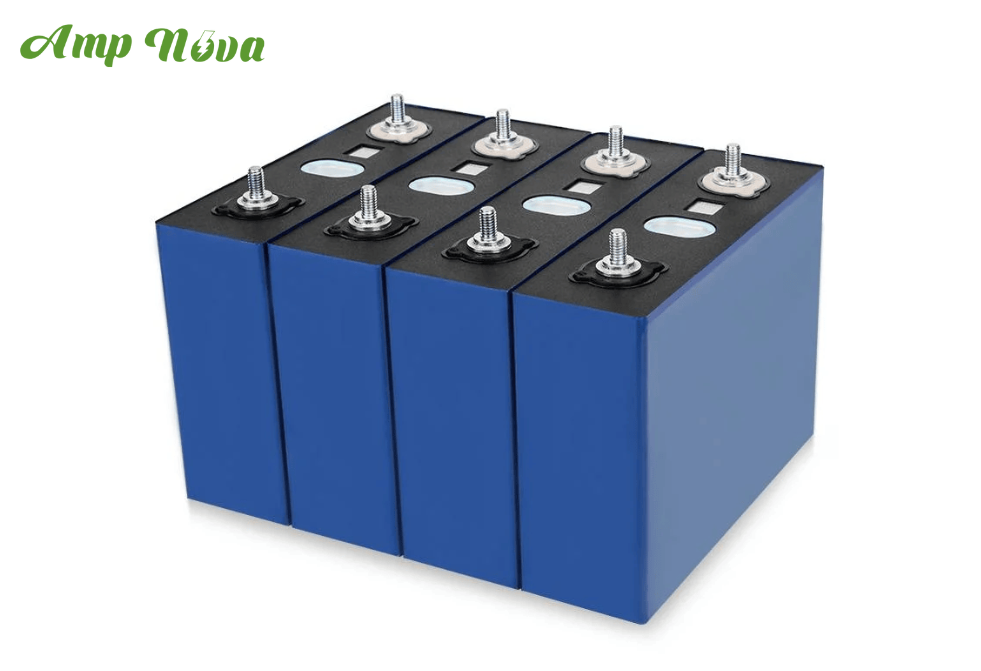
Seli ya kawaida ya LFP inajumuisha:
- Kathodi: LiFePO4 (kipengele kinachofafanua)
- Anodi: kwa kawaida grafiti (kaboni)
- Elektroliti + kitenganishi: huwezesha harakati za ioni huku ikizuia ufupi wa ndani
Wakati wa kutoa, ioni za lithiamu husogea upande mmoja; wakati wa kuchaji, husogea nyuma. Ndiyo maana inaweza kuchajiwa tena.
Nambari za voltage ambazo ni muhimu kweli
LFP Volti ya seli ya kawaida ni ~3.2–3.3V, chini kuliko kemia zingine nyingi za lithiamu-ioni (~3.6–3.7V nominella). Ukweli huo mmoja unaendesha muundo wa pakiti.
Karatasi ya Kudanganya ya Voltage ya Seli/Pakiti ya LFP (mipango ya vitendo)
| Usanidi | Watu husema majina ya “darasa” | Nomino (V) | Lengo la kawaida la kiwango cha juu cha chaji (mfano) | Mkato wa kawaida wa chini (mfano) |
|---|---|---|---|---|
| 1S | Seli ya 3.2V | 3.2–3.3 | 3.45–3.65 | 2.5–2.9 |
| 4S | "12V LFP" | 12.8–13.2 | 13.8–14.6 | 10.0–11.6 |
| 8S | "24V LFP" | 25.6–26.4 | 27.6–29.2 | 20.0–23.2 |
| 16S | "48V LFP" | 51.2–52.8 | 55.2–58.4 | 40.0–46.4 |
Muhimu: Hizi ni mifano ya safu, si vipimo vya jumla. Daima fuata orodha ya data ya seli/pakiti na orodha ya utangamano wa kibadilishaji/chaja.
Kwa nini "darasa la 4S ≈ 12V" ni la kawaida
Mifumo ya "12V" yenye asidi ya risasi iko karibu 12.0–12.8V katika hali nyingi. Mfuatano wa LFP wa seli 4 ni:
- Nomino: ~12.8V (4 × 3.2V)
Kwa hivyo inafaa mifumo ikolojia mingi ya zamani ya 12V (RV, baharini, nishati ndogo ya jua), lakini tu ikiwa chaja na mipigo ya volteji ya chini imerekebishwa ipasavyo.
Ukweli uliofichwa: LFP ina mkunjo wa volteji bapa dhidi ya mkunjo wa SOC
Hapa ndipo mifumo mingi inapopata "makosa ya ajabu."
- Kwa LFP, volteji hubaki tambarare kiasi katika sehemu kubwa ya SOC.
- Hiyo ina maana Volti pekee ni kipimo duni cha mafuta.
- Pakiti inaweza kuonekana "sawa" kwa volteji na bado ikawa karibu tupu (au kinyume chake chini ya hali fulani).
Ni nini kinachofanya kazi vizuri zaidi kuliko kubahatisha kwa voltage
Katika usimamizi halisi wa betri, SOC sahihi kwa kawaida huhitaji:
- Kuhesabu kwa Coulomb (kuunganisha mkondo baada ya muda)
- Pointi za urekebishaji (kama vile kugundua chaji kamili na ukaguzi wa mara kwa mara unaotegemea kupumzika)
- Utambuzi mzuri wa mkondo na usakinishaji thabiti wa shunt
- Mantiki ya BMS ambayo haipiti kwa wiki
Ikiwa kibadilishaji chako cha umeme kinaripoti SOC lakini mfumo haufanyi kazi kwa njia isiyolingana, shuku:
- eneo lisilo sahihi la shunt
- usawa wa kamba sambamba
- Sheria za kuweka upya BMS SOC ambazo hazijawahi kusababisha
- mizigo inayopita kitambuzi cha sasa
Uhandisi wa pakiti ni tofauti kati ya "seli" na "betri"
Katika pakiti kubwa, uaminifu mara nyingi hutegemea kidogo kemia na zaidi:
- seli zinazolingana (uwezo na upinzani wa ndani)
- mipaka ya sasa ya kihafidhina (joto kidogo, msongo mdogo)
- ulinganifu wa waya (upinzani sawa wa njia)
- mkakati wa kusawazisha (usawa wa juu, usawa hai/tulivu, vizingiti)
- miunganisho thabiti (mabasi, torque, mbinu za kuzuia kulegeza)
Katika uwanja, muunganisho mmoja dhaifu unaweza kukwamisha pakiti nzima, kusababisha upashaji joto wa ndani, na kusababisha safari za usumbufu zinazoonekana kama "matatizo ya BMS."
Faida Muhimu za Betri za LiFePO4: Usalama, Muda wa Matumizi, na Utendaji
Wahandisi wetu wanaona kwa nini LFP ni maarufu: mifumo inapoendeshwa kila siku kwa miaka mingi, tabia thabiti ni muhimu zaidi kuliko kufukuza kisanduku kidogo zaidi.
Betri za LiFePO4 huchaguliwa sana kwa sababu ni thabiti katika halijoto na zina usalama ukilinganisha na kemia nyingi za lithiamu-ioni zenye msingi wa kobalti/nikeli, na kwa kawaida hutoa maelfu ya mizunguko kwa ufanisi mkubwa, ambao unaweza kupunguza gharama ya maisha yote katika nishati ya jua na nishati mbadala.
Faida ya 1: Usalama na uthabiti wa joto (kwa nini watu huamini LFP kwa ajili ya nyumba)
LFP mara nyingi hutangazwa kama "salama zaidi," na hoja ya vitendo ni:
- it has a lower tendency toward overheating/thermal runaway than many cobalt/nickel-rich chemistries when abused
This does not mean “can’t catch fire.”
It means “more forgiving under comparable misuse,” especially around heat and overcharge scenarios.
Installer reality check
Safety still depends on:
- correct fusing and DC disconnects
- proper enclosure and ventilation
- cable sizing and terminations
- correct inverter/charger settings
- compliance with local electrical/fire codes
Benefit 2: Long cycle life (the business reason)
Cycle life is the biggest economic lever in solar ESS.
- Many LFP products are designed for thousands of cycles.
- In daily cycling (self-consumption, TOU shifting), longer cycle life often lowers cost per delivered kWh over time.
Simple lifetime-cost thinking (no made-up stats)
If Battery A costs more upfront but lasts 2× the cycles of Battery B in your duty profile, Battery A can win on lifetime cost even if it is heavier or slightly less efficient.
Benefit 3: High usable efficiency and stable output
In many real systems, LFP performs well because:
- internal resistance is reasonable
- voltage sag under load is often manageable
- charge acceptance is strong within temperature limits
- the platform pairs well with modern hybrid inverters and BMS comms (CAN/RS485) when supported
Benefit 4: A strong fit for PV storage duty cycles
Solar storage likes:
- daily cycling
- moderate C-rates
- steady operation in enclosed spaces
LFP matches that pattern well, especially where energy density is not the top priority.
This aligns with the common industry view (and your Chinese note): LFP is safer and cycles more than ternary (NMC-style), but has lower energy density, so it shines in PV/ESS where size and weight are less critical.
Hasara na Mapungufu ya Betri za LiFePO4
On our support tickets, the biggest LFP failures come from temperature mistakes and “charger set-and-forget” habits.
LiFePO4’s main limitations are lower energy density (so packs are larger/heavier), temperature constraints—especially cold charging risk—and system dependence on good BMS, correct charger settings, and balanced pack construction, because voltage is flat and weak links can dominate reliability.
Limitation 1: Lower energy density (bigger/heavier for the same kWh)
Compared with many NMC-style packs, LFP typically needs:
- more volume
- more weight
to deliver the same usable energy.
That is not always a problem in solar:
- wall space and floor space often exist
- weight is manageable with proper mounting
But it matters a lot in: - drones, ultra-compact EV designs, portable consumer devices
Limitation 2: Cold charging is a hidden failure mode
This is one of the most important practical warnings.
- Charging below freezing can increase the risk of lithium plating.
- Plating can reduce capacity and raise safety risk over time.
What robust packs do
- low-temp charge cutoff in the BMS
- temperature sensors placed where they represent the coldest cells
- self-heating (internal heaters) or controlled pre-warm logic
Field rule
- If you cannot guarantee cell temperature above freezing, block charge au heat first.
Limitation 3: SOC estimation is tricky (because the curve is flat)
As covered earlier:
- LFP voltage stays flat across much of the SOC range.
- A “voltage-only fuel gauge” will lie to you.
Practical fixes
- Use a shunt-based meter with coulomb counting.
- Ensure the shunt measures all current in/out (no bypass paths).
- Configure a real “full” calibration condition and let it happen occasionally.
Limitation 4: Charger targets affect lifespan (especially in stationary storage)
Many “12V LiFePO4” systems do not need to be charged “to the top” every day.
In stationary solar storage:
- slightly lower maximum charge voltage can reduce stress
- less time sitting at high SOC can help longevity
Decision rule (general guidance)
- If you need maximum runtime daily (RV trip day), charge full.
- If you want maximum lifespan (stationary ESS), consider a gentler top target and avoid long high-SOC dwell—as long as your BMS and inverter remain stable and your application allows it.
Example charger settings (always verify with your battery vendor)
| System | Typical “absorb/target” (example) | Float (example) | Notes |
|---|---|---|---|
| 12V LFP (4S) | 14.0–14.4V | 13.4–13.6V or disabled | Many ESS setups avoid high float. |
| 24V LFP (8S) | 28.0–28.8V | 26.8–27.2V or disabled | Set LVD/LVR per inverter needs. |
| 48V LFP (16S) | 56.0–57.6V | 53.6–54.4V or disabled | Confirm BMS comms if available. |
Hizi ni example values to illustrate the concept. The correct values depend on the cell design, BMS limits, and inverter firmware.
Limitation 5: “Drop-in” does not mean “drop-everywhere”
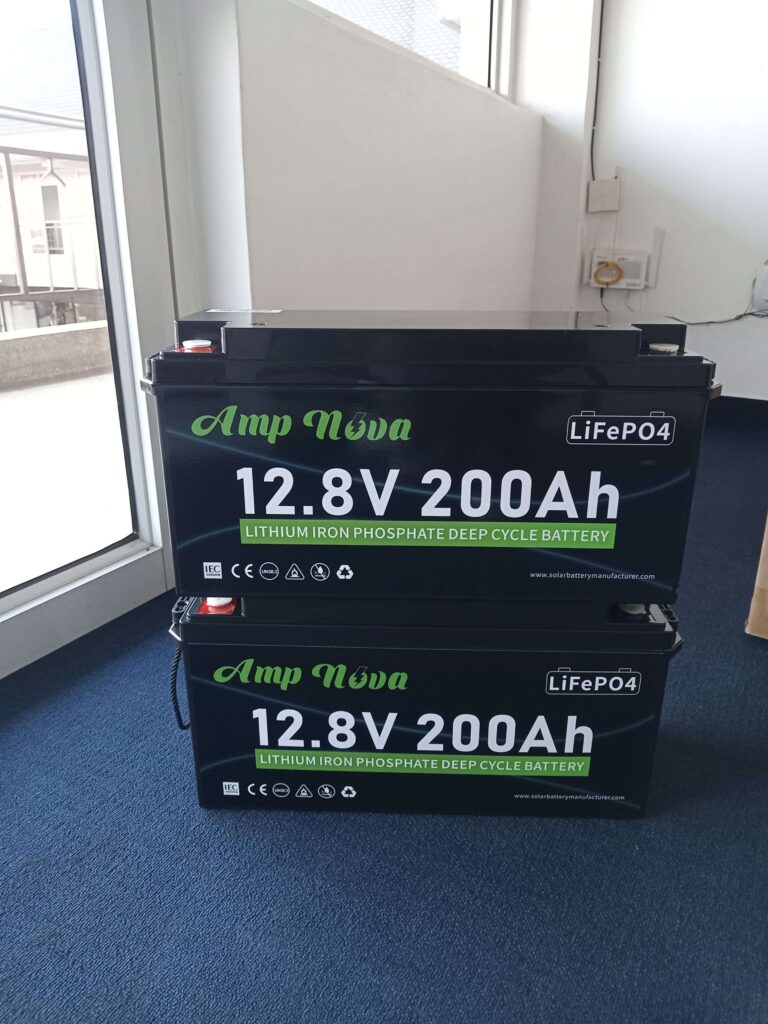
Drop-in RV/marine batteries can still fail when:
- alternators have incompatible charging profiles
- DC-DC chargers are missing
- cable sizing is undersized for inverter surge
- parallel strings are wired asymmetrically
LFP is forgiving, but it is not magic.
LiFePO4 dhidi ya Lithiamu-Ioni dhidi ya Asidi ya Risasi: Tofauti Kuu na Makubaliano
In our application reviews, the wrong choice usually comes from optimizing one metric (like size) while ignoring the duty cycle and operating temperature.
LiFePO4 (LFP) generally trades energy density for safety and long cycle life, NMC-style lithium-ion often trades some thermal stability for higher energy density, and lead-acid trades modern efficiency and usable capacity for low upfront cost—so the best choice depends on cycling frequency, space/weight limits, and how controlled the environment is.
Comparison table you can use in a sales or design meeting
| Factor | LiFePO4 (LFP) | “Lithium-ion” (often NMC/NCA) | Lead-acid (AGM/Flooded) |
|---|---|---|---|
| Safety / thermal stability | Strong | Varies; often less forgiving | Generally stable but can vent; acid risks |
| Cycle life (daily cycling) | Strong | Moderate to strong (chemistry-dependent) | Weak to moderate (depends on DoD) |
| Energy density (size/weight) | Lower | Higher | Very low |
| Usable capacity habits | Good at deeper cycling (within limits) | Good but watch stress at extremes | Often best with shallow cycling |
| Voltage behavior | Flat; SOC by voltage is hard | Less flat; still not perfect | Voltage correlates more with SOC |
| Cold charging | Needs strict protection | Also needs protection | More tolerant (but capacity drops) |
| Best fit | Solar ESS, backup, RV/marine, longevity-first | Space/weight critical, some EV designs | Budget systems, legacy, low-cycle use |
A simple decision tree (fast and practical)
- Do you cycle daily (solar self-consumption / TOU shifting)?
- Yes → LFP usually makes sense.
- Is space/weight extremely limited (portable, high-performance EV)?
- Yes → consider high energy density lithium-ion options.
- Is the budget ultra-tight and cycling is occasional (backup only)?
- Lead-acid may still be viable, but model replacement cost and maintenance.
- Will charging happen in freezing conditions?
- If yes → prioritize packs with low-temp charge cutoff and/or self-heating (often easier with quality LFP packs).
Trade-offs that matter in the field
- LFP’s “safety” advantage can disappear if:
- you oversize the inverter and undersize the cables
- you skip proper fusing
- you cram packs into a hot enclosure
- Lead-acid’s “cheap” advantage can disappear if:
- you replace it frequently due to deep cycling
- you lose energy to lower efficiency and higher losses
For EPC teams, the best metric is usually:
- lifetime delivered kWh per installed dollar, under your real duty cycle
Matumizi ya Betri ya Kawaida ya LiFePO4: Hifadhi ya Jua, RV, Marine, na EV
On our commissioning checklist, LFP shines when the system is built like a system—battery, BMS, protection, wiring, and controls all aligned.
LiFePO4 batteries are commonly used in solar/ESS, backup power, RV and marine “drop-in” upgrades, and some EV segments because their long cycle life and thermal stability match daily cycling and safety-first installations, provided the BMS, charge settings, and low-temperature protections are engineered correctly.
Use case 1: Solar storage / ESS (the natural home for LFP)
Why LFP fits solar:
- daily cycling is common
- space/weight is less constrained than vehicles
- safety and lifetime cost matter most
Practical ESS sizing reminder
- Start with energy (kWh/day), then set usable DoD and autonomy days.
- Confirm inverter battery voltage window (48V-class systems vary).
- Confirm BMS communications support (if using CAN/RS485 integration).
Commissioning checklist (field-ready)
- Verify correct battery profile in the inverter (or set manual voltages).
- Verify charge limit and discharge limit match the pack/BMS.
- Verify temperature sensors read correctly.
- Verify all current paths go through the shunt (if using external SOC).
- Run a controlled full charge to allow SOC calibration (when safe and recommended).
- Check DC protection: main fuse, disconnect, breaker rating, and labeling.
- Confirm grounding and local code compliance (always check local regs).
Use case 2: RV “drop-in” batteries (where myths are common)
LFP drop-ins are popular because they:
- reduce weight
- provide stable voltage under load
- handle cycling better than many lead-acid setups
Common RV pitfalls
- Alternator charging without a DC-DC charger can over-stress systems.
- Poor cable sizing causes voltage drop and heat at inverter surge.
- No low-temp cutoff in winter leads to cold-charge damage.
Rule of thumb
- Treat the battery as part of a DC power system, not an isolated box.
Use case 3: Marine systems (corrosion + safety + wiring matters)
Marine adds:
- corrosion risk at terminals
- vibration
- long cable runs
Engineering tips
- Use tinned copper where required, sealed lugs, correct crimp tools.
- Add strain relief and vibration management.
- Keep wiring symmetric if paralleling packs.
- Ensure ventilation and enclosure rating match the environment.
Use case 4: Backup power (homes, telecom, commercial)
Backup loads are often bursty:
- inrush currents
- long idle periods
- sudden outages
SOC truth for backup
Because LFP voltage is flat, backup systems should rely on:
- coulomb-counted SOC
- periodic controlled calibration
- alarms for drift or imbalance
Use case 5: Some EV segments (longevity and safety over compactness)
EV adoption of LFP often correlates with:
- cost stability
- long service life
- safety considerations
But energy density still matters for range and weight, so the platform choice depends on the vehicle’s priorities.
Reliability tip: pack engineering beats chemistry marketing
If you want fewer service calls, focus on:
- cell matching and traceability
- conservative continuous and peak current limits
- solid busbar design and torque control
- balanced wiring for parallel strings
- clear balancing strategy (and proof it works)
Failure modes & mitigations (installer quick reference)
| Symptom | Likely root cause | Fast field check | Fix / prevention |
|---|---|---|---|
| SOC jumps or drifts | Shunt bypass, bad calibration | Clamp meter vs shunt reading | Rewire to ensure all current is measured; recalibrate |
| Early BMS cutoffs | Weak cell, imbalance, bad interconnect | Cell voltage delta at top/bottom | Improve balancing; fix busbar/torque; replace weak cell/module |
| Hot cable or lug | Undersized cable or poor crimp | IR camera, touch-safe inspection | Correct cable gauge; redo lugs; torque to spec |
| Winter capacity complaints | Cold temperature limits | Check cell temp under load/charge | Add insulation/heating; enforce low-temp charge cutoff |
FAQ (PAA-style)
Is LiFePO4 the same as lithium-ion?
LiFePO4 is a type of lithium-ion. “Lithium-ion” is a family name. LFP uses a lithium iron phosphate cathode, which changes voltage, safety behavior, and typical cycle life compared with NMC/NCA.
Why do people call a 4S LFP pack a “12V battery”?
Because 4 cells × ~3.2V nominal ≈ 12.8V nominal. It fits many 12V-class systems, but you should still adjust charge and low-voltage settings for LFP behavior.
Can I measure LFP state of charge (SOC) by voltage?
Not accurately across most of the range. LFP has a flat voltage curve, so SOC is better estimated with coulomb counting plus occasional calibration (often via BMS and a shunt).
Should I float-charge LiFePO4 like lead-acid?
Often, no. Many LFP systems do not need continuous float at high voltage. A gentler approach can help lifespan in stationary storage, but you must follow your battery/BMS guidance to avoid nuisance cutoffs.
Is it safe to charge LiFePO4 below freezing?
It is risky. Charging below freezing can promote lithium plating. Quality packs use low-temp charge cutoffs and sometimes internal heaters or pre-warm logic.
What’s the biggest cause of LiFePO4 pack failures in real installs?
System and pack engineering issues: wrong charger settings, poor wiring, undersized protection, imbalance in parallel strings, and weak interconnects. The cells may be fine, but the pack and install details decide reliability.
LFP or NMC for solar storage?
For most stationary solar storage, LFP is a strong default because safety and cycle life matter more than energy density. If space and weight are extremely constrained, you may consider higher energy density lithium-ion options.
Can I parallel multiple “drop-in” LFP batteries?
Often yes, but follow the manufacturer’s rules. Use symmetric wiring, matching batteries, correct fusing per string, and confirm the BMS supports parallel behavior without fighting.
Do I need a special inverter for LiFePO4?
You need an inverter/charger that supports LFP voltage windows and charge control, ideally with a compatible BMS communication profile. Manual settings can work, but commissioning must be careful.
Hitimisho
LFP is a lithium-ion chemistry built for safety and long life. Size it by series voltage, protect it with a real BMS and DC protection, and set charging for your duty cycle—then your solar storage will behave predictably.