Hay tres ventajas principales de las pruebas de envejecimiento.

  • La primera ventaja es mejorar la infiltración del electrolito, lo que favorece la estabilidad del rendimiento del paquete de baterías de litio;
  • La segunda es que después del envejecimiento de las sustancias activas en los materiales de los electrodos positivo y negativo, algunos efectos secundarios pueden acelerarse, como la producción de gas, la descomposición de electrolitos, etc., de modo que el rendimiento electroquímico del paquete de baterías de litio puede mejorarse rápidamente. estabilizado;
  • El tercero es realizar controles constantes de los paquetes de baterías de litio después de envejecer durante un período de tiempo. Después de la formación, el voltaje de la celda de la batería es inestable y su valor medido se desviará del valor real. El voltaje y la resistencia interna de la celda de la batería envejecida son más estables, lo que resulta conveniente para detectar baterías con alta consistencia.

Las baterías de iones de litio, como todas las baterías, se degradan con el tiempo y con el uso. Esta degradación puede tener una serie de efectos negativos, como capacidad reducida, mayor resistencia interna y capacidad reducida para entregar corrientes altas. Como resultado, es importante comprender cómo se comportará una batería en particular a medida que envejece para poder predecir y gestionar adecuadamente su rendimiento.

One of the primary reasons for conducting an aging test on a lithium-ion battery is to determine its capacity fade rate. Capacity fade is the decrease in a battery's ability to store and deliver energy over time. This can be caused by a number of factors, such as the accumulation of defects in the battery's active materials, the formation of a solid electrolyte interface (SEI) on the surface of the electrodes, and the loss of electrochemically active material through processes such as lithium plating. By measuring the capacity of a battery at regular intervals over its lifetime, it is possible to determine how quickly its capacity will fade and how much capacity will be lost at a given point in time.

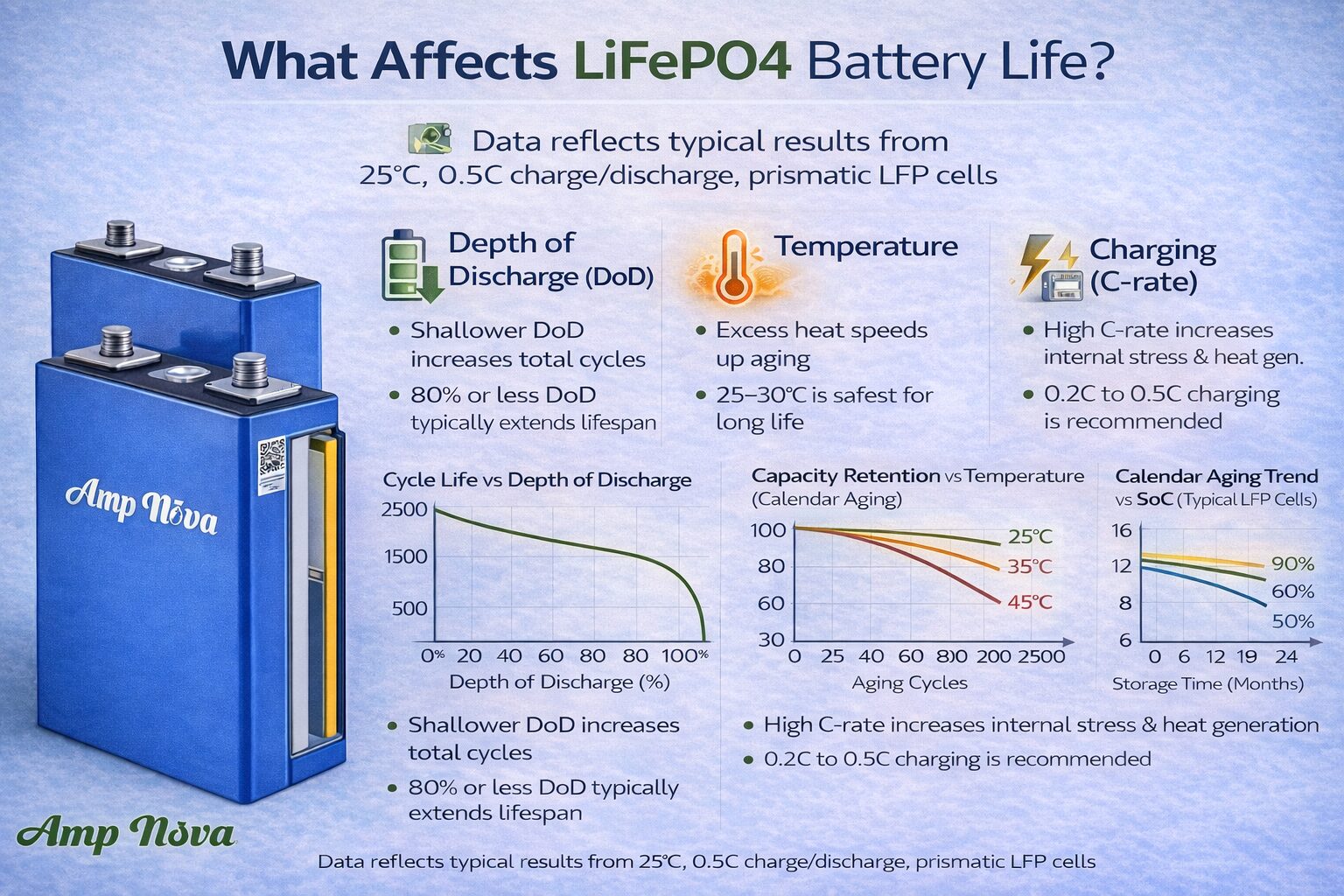
Another important reason for conducting an aging test is to understand how a battery will behave under different operating conditions. For example, a battery's capacity fade rate may vary depending on factors such as the temperature at which it is used, the depth of discharge, and the rate at which it is charged and discharged. By testing a battery under a range of different conditions, it is possible to identify the conditions that are most likely to cause degradation and to develop strategies for minimizing the effects of aging.

In addition to capacity fade and performance under different operating conditions, an aging test can also provide information about other aspects of a battery's behavior. For example, an aging test can be used to determine a battery's impedance, which is a measure of the resistance it presents to the flow of electric current. This is important because a battery with high impedance will have a lower ability to deliver high currents, which can be a problem in applications such as power tools and electric vehicles. By measuring impedance, it is possible to identify batteries that are likely to perform poorly under high-current conditions and to develop strategies for improving their performance.

Another factor that can be determined through an aging test is a battery's calendar life, which is the length of time that a battery can be stored without significant loss of capacity. Calendar life is important because many applications require batteries to be stored for extended periods before they are put into use. By testing the calendar life of a battery, it is possible to determine how long it can be stored without losing significant capacity and to develop strategies for maximizing its useful life.

En general, la prueba de envejecimiento es una herramienta importante para comprender el comportamiento de las baterías de iones de litio a lo largo del tiempo. Al proporcionar información sobre la pérdida de capacidad, el rendimiento bajo diferentes condiciones operativas, la impedancia, la vida útil y otras características importantes, la prueba de envejecimiento puede ayudar a los fabricantes y usuarios a optimizar el rendimiento de la batería y prolongar su vida útil.