


Apa itu baterai LiFePO4?
I see pack failures on our production line when buyers treat “LiFePO4” like a magic label, so I’ll fix the confusion and show what matters in real solar builds.
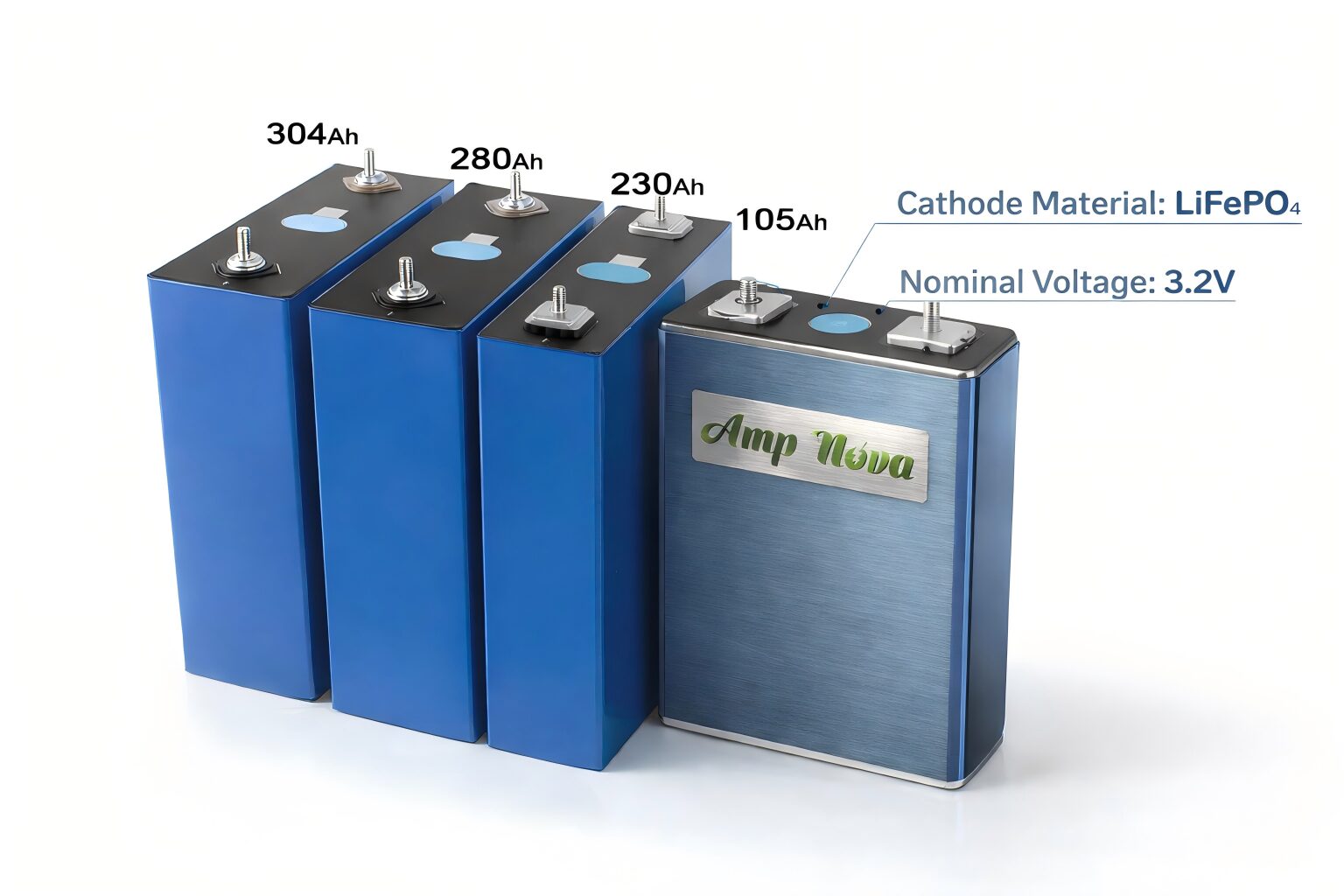
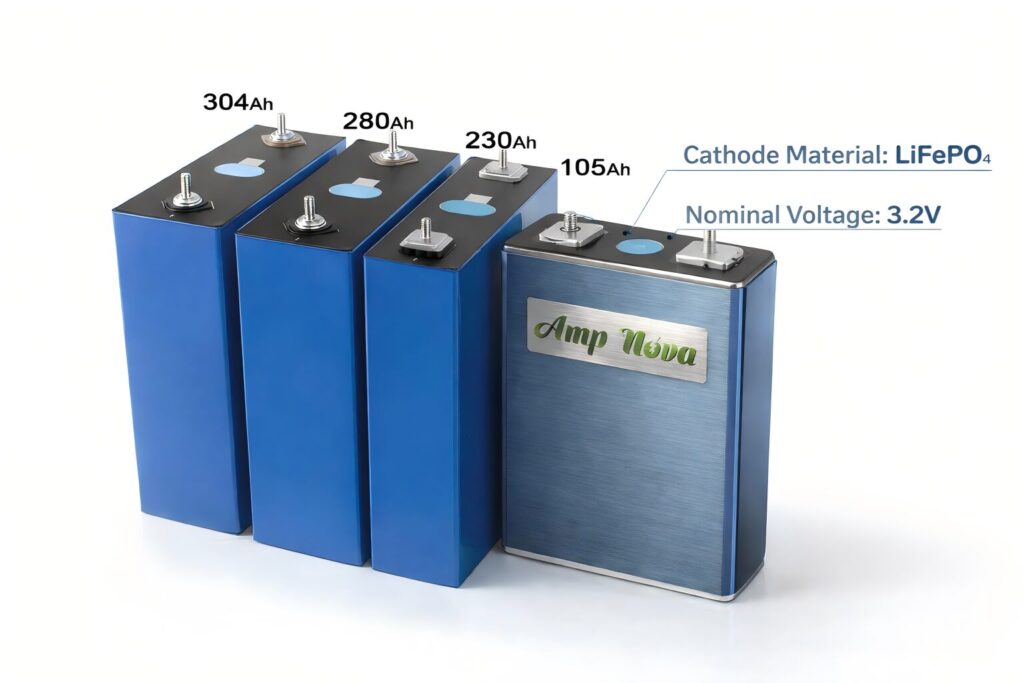
A LiFePO4 (LFP) battery is a rechargeable lithium-ion battery that uses lithium iron phosphate as the cathode material, delivering strong safety and long cycle life with a ~3.2–3.3V nominal cell voltage that drives pack sizing (like 4 cells in series for “12V-class”).
In this guide, I’ll break down LFP chemistry, voltage behavior, pros and cons, and how it compares with NMC lithium-ion and lead-acid in practical solar and mobile systems.
What Is a LiFePO4 (Lithium Iron Phosphate) Battery?
On our QC benches, the fastest way to spot a mismatched system is when the label says “LiFePO4” but the buyer expects “all lithium batteries behave the same.”
A LiFePO4 battery (also called LFP) is a lithium-ion battery that specifically uses lithium iron phosphate (LiFePO4) as the cathode, which changes its voltage, safety behavior, cycle life, and ideal applications compared with other lithium-ion chemistries like NMC.
LFP is “lithium-ion,” but not “the same as NMC”
People often say “lithium-ion” as if it is one thing. It is not. “Lithium-ion” is a family of chemistries that share a broad working principle, but differ in cathode materials.
- LiFePO4 (LFP): lithium iron phosphate cathode
- NMC / NCA (often called “ternary” in Chinese): nickel/manganese/cobalt (or nickel/cobalt/aluminum) cathodes
- LCO, LMO, and others: used in various electronics and older designs
That cathode choice changes what you feel in the field:
- How steady the voltage is under load
- How sensitive the pack is to heat abuse
- How many cycles can you reasonably expect before capacity fades
- How much energy can you pack into a given volume and weight
Plain-language definition you can use with customers
If you need one sentence for a client:
- LFP is a lithium-ion battery chemistry chosen for safety and long life, often at the cost of size and weight for the same kWh.
Quick installer note
For solar storage, LFP usually wins because the project values:
- predictable performance
- long service intervals
- lower fire risk profile
- lower lifetime cost
But it still demands correct settings and protection. Chemistry does not replace engineering.
LiFePO4 Battery Chemistry Explained: Cells, Voltage, and How It Works?
In our factory end-of-line tests, most “bad batteries” are actually “bad assumptions,” especially around voltage, SOC, and how series strings behave.
LiFePO4 cells work by moving lithium ions between an LFP cathode and a carbon-based anode, and each cell sits at about 3.2–3.3V nominal, so the series count (like 4S, 8S, 16S) sets system voltage while a BMS manages protection, measurement, and balancing.
The basic parts (no fluff)
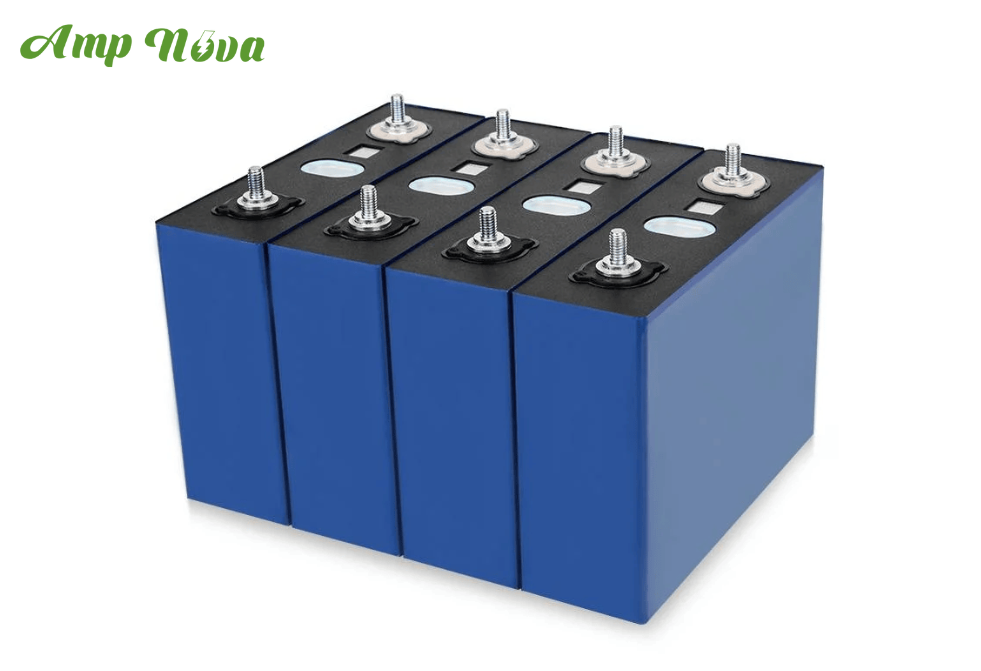
A typical LFP cell includes:
- Cathode: LiFePO4 (the defining feature)
- Anode: usually graphite (carbon)
- Electrolyte + separator: enables ion movement while preventing internal short
During discharge, lithium ions move in one direction; during charge, they move back. That is why it is rechargeable.
The voltage numbers that actually matter
LFP’s nominal cell voltage is ~3.2–3.3V, lower than many other lithium-ion chemistries (~3.6–3.7V nominal). That one fact drives pack design.
LFP Cell/Pack Voltage Cheat Sheet (practical planning)
| Configuration | “Class” name people say | Nominal (V) | Typical max charge target (example) | Typical low cutoff (example) |
|---|---|---|---|---|
| 1S | 3.2V cell | 3.2–3.3 | 3.45–3.65 | 2.5–2.9 |
| 4S | “12V LFP” | 12.8–13.2 | 13.8–14.6 | 10.0–11.6 |
| 8S | “24V LFP” | 25.6–26.4 | 27.6–29.2 | 20.0–23.2 |
| 16S | “48V LFP” | 51.2–52.8 | 55.2–58.4 | 40.0–46.4 |
Important: These are example ranges, not universal specs. Always follow the cell/pack datasheet and inverter/charger compatibility list.
Why “4S ≈ 12V class” is common
Lead-acid “12V” systems sit around 12.0–12.8V in many conditions. A 4-cell LFP string is:
- Nominal: ~12.8V (4 × 3.2V)
So it fits many legacy 12V ecosystems (RV, marine, small solar), but only if the charger and low-voltage cutoffs are adjusted correctly.
The hidden truth: LFP has a flat voltage vs SOC curve
This is where many systems get “mysteriously wrong.”
- With LFP, voltage stays relatively flat across a large part of SOC.
- That means voltage alone is a poor fuel gauge.
- A pack can look “fine” by voltage and still be near empty (or vice versa under certain conditions).
What works better than voltage guessing
In real battery management, accurate SOC typically needs:
- Coulomb counting (integrating current over time)
- Calibration points (like full charge detection and occasional rest-based checks)
- Good current sensing and stable shunt installation
- BMS logic that does not drift over weeks
If your inverter reports SOC but the system behaves inconsistently, suspect:
- wrong shunt location
- parallel string imbalance
- BMS SOC reset rules that never trigger
- loads bypassing the current sensor
Pack engineering is the difference between “cells” and “battery”
In larger packs, reliability often depends less on chemistry and more on:
- matched cells (capacity and internal resistance)
- conservative current limits (less heat, less stress)
- wiring symmetry (equal path resistance)
- balancing strategy (top-balance, active/passive balance, thresholds)
- solid interconnects (busbars, torque, anti-loosening practices)
In the field, a single weak interconnect can bottleneck the whole pack, cause localized heating, and trigger nuisance trips that look like “BMS issues.”
Key Benefits of LiFePO4 Batteries: Safety, Lifespan, and Performance
Our engineers see why LFP is popular: when systems run daily for years, stable behavior matters more than chasing the smallest box.
LiFePO4 batteries are widely chosen because they are thermally stable and safety-forward compared with many cobalt/nickel-based lithium-ion chemistries, and they commonly deliver thousands of cycles with strong efficiency, which can lower lifetime cost in solar and backup power.
Benefit 1: Safety and thermal stability (why people trust LFP for homes)
LFP is often marketed as “safer,” and the practical point is:
- it has a lower tendency toward overheating/thermal runaway than many cobalt/nickel-rich chemistries when abused
This does not mean “can’t catch fire.”
It means “more forgiving under comparable misuse,” especially around heat and overcharge scenarios.
Installer reality check
Safety still depends on:
- correct fusing and DC disconnects
- proper enclosure and ventilation
- cable sizing and terminations
- correct inverter/charger settings
- compliance with local electrical/fire codes
Benefit 2: Long cycle life (the business reason)
Cycle life is the biggest economic lever in solar ESS.
- Many LFP products are designed for thousands of cycles.
- In daily cycling (self-consumption, TOU shifting), longer cycle life often lowers cost per delivered kWh over time.
Simple lifetime-cost thinking (no made-up stats)
If Battery A costs more upfront but lasts 2× the cycles of Battery B in your duty profile, Battery A can win on lifetime cost even if it is heavier or slightly less efficient.
Benefit 3: High usable efficiency and stable output
In many real systems, LFP performs well because:
- internal resistance is reasonable
- voltage sag under load is often manageable
- charge acceptance is strong within temperature limits
- the platform pairs well with modern hybrid inverters and BMS comms (CAN/RS485) when supported
Benefit 4: A strong fit for PV storage duty cycles
Solar storage likes:
- daily cycling
- moderate C-rates
- steady operation in enclosed spaces
LFP matches that pattern well, especially where energy density is not the top priority.
This aligns with the common industry view (and your Chinese note): LFP is safer and cycles more than ternary (NMC-style), but has lower energy density, so it shines in PV/ESS where size and weight are less critical.
Disadvantages and Limitations of LiFePO4 Batteries
On our support tickets, the biggest LFP failures come from temperature mistakes and “charger set-and-forget” habits.
LiFePO4’s main limitations are lower energy density (so packs are larger/heavier), temperature constraints—especially cold charging risk—and system dependence on good BMS, correct charger settings, and balanced pack construction, because voltage is flat and weak links can dominate reliability.
Limitation 1: Lower energy density (bigger/heavier for the same kWh)
Compared with many NMC-style packs, LFP typically needs:
- more volume
- more weight
to deliver the same usable energy.
That is not always a problem in solar:
- wall space and floor space often exist
- weight is manageable with proper mounting
But it matters a lot in: - drones, ultra-compact EV designs, portable consumer devices
Limitation 2: Cold charging is a hidden failure mode
This is one of the most important practical warnings.
- Charging below freezing can increase the risk of lithium plating.
- Plating can reduce capacity and raise safety risk over time.
What robust packs do
- low-temp charge cutoff in the BMS
- temperature sensors placed where they represent the coldest cells
- self-heating (internal heaters) or controlled pre-warm logic
Field rule
- If you cannot guarantee cell temperature above freezing, block charge or heat first.
Limitation 3: SOC estimation is tricky (because the curve is flat)
As covered earlier:
- LFP voltage stays flat across much of the SOC range.
- A “voltage-only fuel gauge” will lie to you.
Practical fixes
- Use a shunt-based meter with coulomb counting.
- Ensure the shunt measures all current in/out (no bypass paths).
- Configure a real “full” calibration condition and let it happen occasionally.
Limitation 4: Charger targets affect lifespan (especially in stationary storage)
Many “12V LiFePO4” systems do not need to be charged “to the top” every day.
In stationary solar storage:
- slightly lower maximum charge voltage can reduce stress
- less time sitting at high SOC can help longevity
Decision rule (general guidance)
- If you need maximum runtime daily (RV trip day), charge full.
- If you want maximum lifespan (stationary ESS), consider a gentler top target and avoid long high-SOC dwell—as long as your BMS and inverter remain stable and your application allows it.
Example charger settings (always verify with your battery vendor)
| System | Typical “absorb/target” (example) | Float (example) | Notes |
|---|---|---|---|
| 12V LFP (4S) | 14.0–14.4V | 13.4–13.6V or disabled | Many ESS setups avoid high float. |
| 24V LFP (8S) | 28.0–28.8V | 26.8–27.2V or disabled | Set LVD/LVR per inverter needs. |
| 48V LFP (16S) | 56.0–57.6V | 53.6–54.4V or disabled | Confirm BMS comms if available. |
These are example values to illustrate the concept. The correct values depend on the cell design, BMS limits, and inverter firmware.
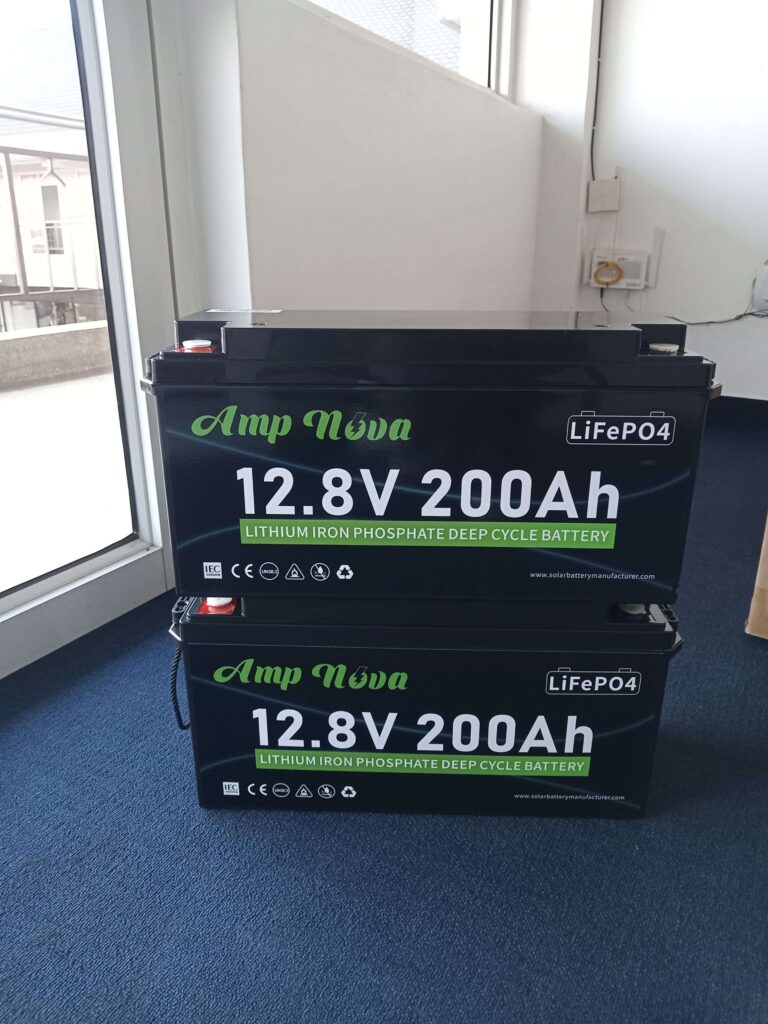
Limitation 5: “Drop-in” does not mean “drop-everywhere”
Drop-in RV/marine batteries can still fail when:
- alternators have incompatible charging profiles
- DC-DC chargers are missing
- cable sizing is undersized for inverter surge
- parallel strings are wired asymmetrically
LFP is forgiving, but it is not magic.
LiFePO4 vs Lithium-Ion vs Lead-Acid: Main Differences and Trade-Offs
In our application reviews, the wrong choice usually comes from optimizing one metric (like size) while ignoring the duty cycle and operating temperature.
LiFePO4 (LFP) generally trades energy density for safety and long cycle life, NMC-style lithium-ion often trades some thermal stability for higher energy density, and lead-acid trades modern efficiency and usable capacity for low upfront cost—so the best choice depends on cycling frequency, space/weight limits, and how controlled the environment is.
Comparison table you can use in a sales or design meeting
| Factor | LiFePO4 (LFP) | “Lithium-ion” (often NMC/NCA) | Lead-acid (AGM/Flooded) |
|---|---|---|---|
| Safety / thermal stability | Strong | Varies; often less forgiving | Generally stable but can vent; acid risks |
| Cycle life (daily cycling) | Strong | Moderate to strong (chemistry-dependent) | Weak to moderate (depends on DoD) |
| Energy density (size/weight) | Lower | Higher | Very low |
| Usable capacity habits | Good at deeper cycling (within limits) | Good but watch stress at extremes | Often best with shallow cycling |
| Voltage behavior | Flat; SOC by voltage is hard | Less flat; still not perfect | Voltage correlates more with SOC |
| Cold charging | Needs strict protection | Also needs protection | More tolerant (but capacity drops) |
| Best fit | Solar ESS, backup, RV/marine, longevity-first | Space/weight critical, some EV designs | Budget systems, legacy, low-cycle use |
A simple decision tree (fast and practical)
- Do you cycle daily (solar self-consumption / TOU shifting)?
- Yes → LFP usually makes sense.
- Is space/weight extremely limited (portable, high-performance EV)?
- Yes → consider high energy density lithium-ion options.
- Is the budget ultra-tight and cycling is occasional (backup only)?
- Lead-acid may still be viable, but model replacement cost and maintenance.
- Will charging happen in freezing conditions?
- If yes → prioritize packs with low-temp charge cutoff and/or self-heating (often easier with quality LFP packs).
Trade-offs that matter in the field
- LFP’s “safety” advantage can disappear if:
- you oversize the inverter and undersize the cables
- you skip proper fusing
- you cram packs into a hot enclosure
- Lead-acid’s “cheap” advantage can disappear if:
- you replace it frequently due to deep cycling
- you lose energy to lower efficiency and higher losses
For EPC teams, the best metric is usually:
- lifetime delivered kWh per installed dollar, under your real duty cycle
Common LiFePO4 Battery Uses: Solar Storage, RVs, Marine, and EVs
On our commissioning checklist, LFP shines when the system is built like a system—battery, BMS, protection, wiring, and controls all aligned.
LiFePO4 batteries are commonly used in solar/ESS, backup power, RV and marine “drop-in” upgrades, and some EV segments because their long cycle life and thermal stability match daily cycling and safety-first installations, provided the BMS, charge settings, and low-temperature protections are engineered correctly.
Use case 1: Solar storage / ESS (the natural home for LFP)
Why LFP fits solar:
- daily cycling is common
- space/weight is less constrained than vehicles
- safety and lifetime cost matter most
Practical ESS sizing reminder
- Start with energy (kWh/day), then set usable DoD and autonomy days.
- Confirm inverter battery voltage window (48V-class systems vary).
- Confirm BMS communications support (if using CAN/RS485 integration).
Commissioning checklist (field-ready)
- Verify correct battery profile in the inverter (or set manual voltages).
- Verify charge limit and discharge limit match the pack/BMS.
- Verify temperature sensors read correctly.
- Verify all current paths go through the shunt (if using external SOC).
- Run a controlled full charge to allow SOC calibration (when safe and recommended).
- Check DC protection: main fuse, disconnect, breaker rating, and labeling.
- Confirm grounding and local code compliance (always check local regs).
Use case 2: RV “drop-in” batteries (where myths are common)
LFP drop-ins are popular because they:
- reduce weight
- provide stable voltage under load
- handle cycling better than many lead-acid setups
Common RV pitfalls
- Alternator charging without a DC-DC charger can over-stress systems.
- Poor cable sizing causes voltage drop and heat at inverter surge.
- No low-temp cutoff in winter leads to cold-charge damage.
Rule of thumb
- Treat the battery as part of a DC power system, not an isolated box.
Use case 3: Marine systems (corrosion + safety + wiring matters)
Marine adds:
- corrosion risk at terminals
- vibration
- long cable runs
Engineering tips
- Use tinned copper where required, sealed lugs, correct crimp tools.
- Add strain relief and vibration management.
- Keep wiring symmetric if paralleling packs.
- Ensure ventilation and enclosure rating match the environment.
Use case 4: Backup power (homes, telecom, commercial)
Backup loads are often bursty:
- inrush currents
- long idle periods
- sudden outages
SOC truth for backup
Because LFP voltage is flat, backup systems should rely on:
- coulomb-counted SOC
- periodic controlled calibration
- alarms for drift or imbalance
Use case 5: Some EV segments (longevity and safety over compactness)
EV adoption of LFP often correlates with:
- cost stability
- long service life
- safety considerations
But energy density still matters for range and weight, so the platform choice depends on the vehicle’s priorities.
Reliability tip: pack engineering beats chemistry marketing
If you want fewer service calls, focus on:
- cell matching and traceability
- conservative continuous and peak current limits
- solid busbar design and torque control
- balanced wiring for parallel strings
- clear balancing strategy (and proof it works)
Failure modes & mitigations (installer quick reference)
| Symptom | Likely root cause | Fast field check | Fix / prevention |
|---|---|---|---|
| SOC jumps or drifts | Shunt bypass, bad calibration | Clamp meter vs shunt reading | Rewire to ensure all current is measured; recalibrate |
| Early BMS cutoffs | Weak cell, imbalance, bad interconnect | Cell voltage delta at top/bottom | Improve balancing; fix busbar/torque; replace weak cell/module |
| Hot cable or lug | Undersized cable or poor crimp | IR camera, touch-safe inspection | Correct cable gauge; redo lugs; torque to spec |
| Winter capacity complaints | Cold temperature limits | Check cell temp under load/charge | Add insulation/heating; enforce low-temp charge cutoff |
FAQ (PAA-style)
Is LiFePO4 the same as lithium-ion?
LiFePO4 is a type of lithium-ion. “Lithium-ion” is a family name. LFP uses a lithium iron phosphate cathode, which changes voltage, safety behavior, and typical cycle life compared with NMC/NCA.
Why do people call a 4S LFP pack a “12V battery”?
Because 4 cells × ~3.2V nominal ≈ 12.8V nominal. It fits many 12V-class systems, but you should still adjust charge and low-voltage settings for LFP behavior.
Can I measure LFP state of charge (SOC) by voltage?
Not accurately across most of the range. LFP has a flat voltage curve, so SOC is better estimated with coulomb counting plus occasional calibration (often via BMS and a shunt).
Should I float-charge LiFePO4 like lead-acid?
Often, no. Many LFP systems do not need continuous float at high voltage. A gentler approach can help lifespan in stationary storage, but you must follow your battery/BMS guidance to avoid nuisance cutoffs.
Is it safe to charge LiFePO4 below freezing?
It is risky. Charging below freezing can promote lithium plating. Quality packs use low-temp charge cutoffs and sometimes internal heaters or pre-warm logic.
What’s the biggest cause of LiFePO4 pack failures in real installs?
System and pack engineering issues: wrong charger settings, poor wiring, undersized protection, imbalance in parallel strings, and weak interconnects. The cells may be fine, but the pack and install details decide reliability.
LFP or NMC for solar storage?
For most stationary solar storage, LFP is a strong default because safety and cycle life matter more than energy density. If space and weight are extremely constrained, you may consider higher energy density lithium-ion options.
Can I parallel multiple “drop-in” LFP batteries?
Often yes, but follow the manufacturer’s rules. Use symmetric wiring, matching batteries, correct fusing per string, and confirm the BMS supports parallel behavior without fighting.
Do I need a special inverter for LiFePO4?
You need an inverter/charger that supports LFP voltage windows and charge control, ideally with a compatible BMS communication profile. Manual settings can work, but commissioning must be careful.
Kesimpulan
LFP is a lithium-ion chemistry built for safety and long life. Size it by series voltage, protect it with a real BMS and DC protection, and set charging for your duty cycle—then your solar storage will behave predictably.